
The Million-Dollar myth: Why income alone won’t make you wealthy
Confession: Most people confuse income with wealth. Big mistake.
We live in a world that worships paychecks. Raise? Bonus? Promotion? We feel rich—until the bills hit. That’s because income isn’t the same as wealth, no matter what your Instagram feed says.
Think earning more will make you rich? Learn why true wealth comes from how you use your income – and how anyone can build financial freedom.
Most people believe that the road to financial freedom begins with a high income. “If I could just make six figures,” they think, “I’d finally be secure.”
Yet every year, thousands of professionals earn more money than ever before—and still feel stuck, stressed, and unsure where it’s all going. The truth is simple but powerful: your income is not your wealth. People with impressive paychecks feel anxious about money, while others with modest incomes quietly build stability and freedom.
The difference isn’t how much they make—it’s how effectively they turn income into assets that grow.
Wealth mindset
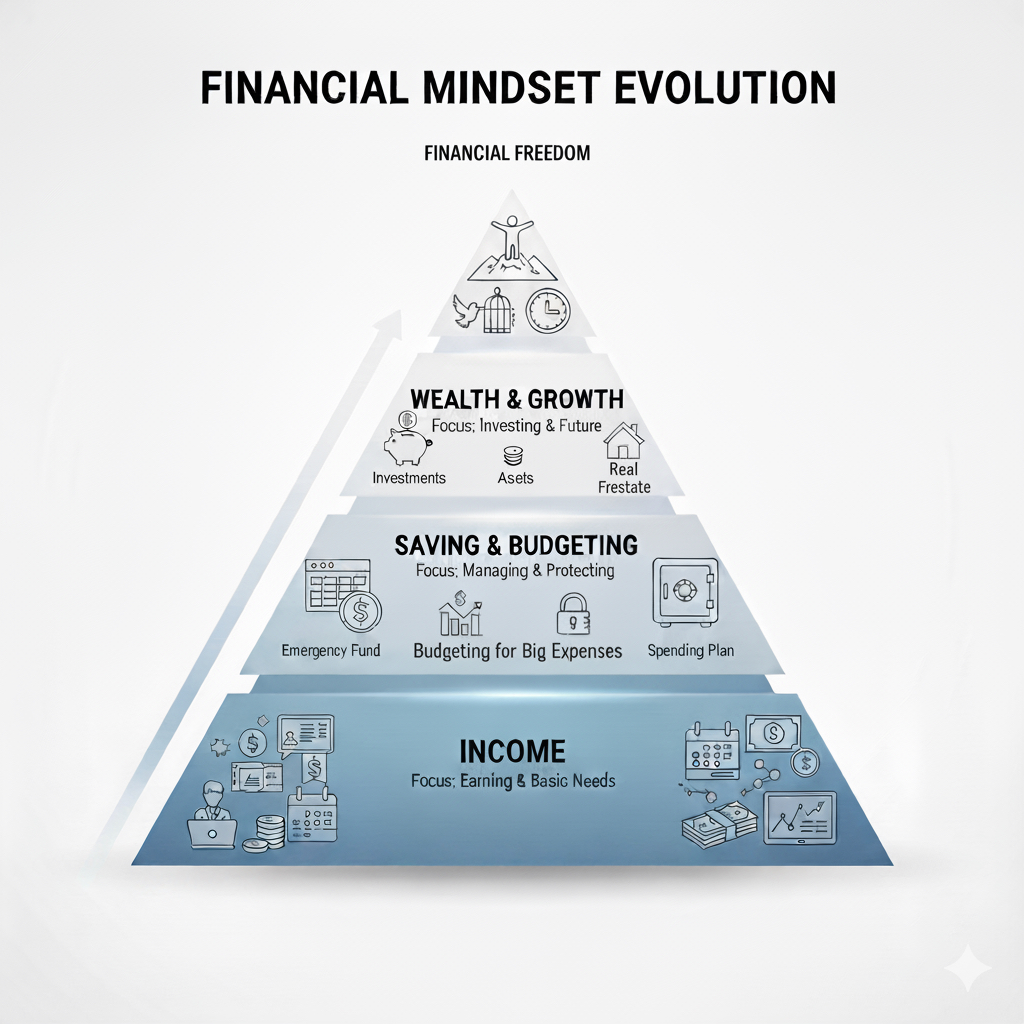
Income vs. Wealth: The Foundation of Financial Freedom
Before you can build wealth, you have to understand what it really is.
Income is money flowing to you—your salary, commissions, side gigs, or small business revenue. It’s measured over time (per month or per year). Wealth is money that stays with you—your savings, investments, and property minus your debts. It’s a snapshot of what you truly own.
Income = stream. Wealth = reservoir.
- Income = money you earn
- Wealth = money you own, control, and grow
You can think of income as a stream and wealth as a reservoir. Streams dry up, but reservoirs sustain you through dry seasons. Your real financial progress begins when part of your income stream starts filling that reservoir—consistently and intentionally.
Why High Earners Often Feel Broke
If income automatically created wealth, every high earner would be financially secure. But that’s rarely the case. The reason is something I call “conversion inefficiency.” It’s not about how much money you make—it’s about how much of it you keep, grow, and protect. Even with a large paycheck, lifestyle inflation (spending more as you earn more) and poor financial habits can keep you living paycheck to paycheck. Meanwhile, someone with a modest salary who consistently saves, invests, and manages debt strategically can end up with a higher net worth over time.
Wealth isn’t about status—it’s about structure.
The Hidden Engines of Wealth (For Every Income Level)
Let’s break down what actually grows wealth. These principles apply whether you earn $40,000 (or less) or $400,000 (or more).
1. Compounding: The Quiet Multiplier
Compounding is what turns small, consistent savings into large, lasting wealth. It’s the process where your money earns returns—and those returns earn even more returns. Even $100 a month invested over 20 years can grow into tens of thousands of dollars, depending on your rate of return. The key is time and consistency. Waiting for a higher income to start investing means missing out on the most valuable resource you have—time.
The earlier you begin, the more powerful compounding becomes.
2. Taxes Favor Wealth, Not Wages
Here’s a truth most people never learn: the tax code rewards investors, not just earners.
- Earned income (from wages) is taxed immediately and at higher rates.
- Investment income (from stocks, real estate, or dividends) often benefits from lower long-term capital gains rates.
- You can control when to sell an investment—and therefore when to pay taxes.
Even if you’re not a millionaire, you can still benefit from tax-advantaged accounts:
- 401(k) or 403(b): Pre-tax contributions reduce your taxable income now.
- IRA or Roth IRA: Offers tax-free or tax-deferred growth.
- HSA (Health Savings Account): The most tax-efficient account in America—tax-free going in, growing, and coming out (for qualified expenses).
The fastest way to get ahead isn’t just earning more—it’s keeping more of what you earn.
3. Good Debt vs. Bad Debt
Debt isn’t inherently bad—it’s how you use it that matters.
- Good debt helps you grow wealth, such as a mortgage on an appreciating home or an education that increases your earning potential.
- Bad debt drains your wealth, such as high-interest credit cards or loans used for short-term spending.
If you’re paying 20% interest on a credit card, it’s nearly impossible to build wealth until that debt is gone. Eliminating bad debt is like earning a guaranteed return equal to the interest rate you no longer have to pay.
Ask yourself before taking on debt—will this help me earn or grow more in the future, or will it cost me peace of mind?
4. Automate Your Progress
The biggest difference between those who build wealth and those who don’t isn’t willpower—it’s automation. When you automatically move money from checking to savings or investments each month, you remove emotion from the process. You don’t have to think about it, negotiate with yourself, or remember. Automation ensures that wealth-building happens first, not last.
Treat saving and investing like a bill you owe your future self.
5. Behavior Is the True Wealth Divider
Money management is 80% behavior and 20% math. Here are the three behavioral traps that stop people from growing wealth—and how to overcome them:
a. Lifestyle Creep (The Hedonic Treadmill): As your income grows, your expenses grow with it. New car. Better vacations. Bigger house. Before you know it, you’re earning more but saving the same—or less.
The fix? Each time your income rises, automatically save or invest half of the increase. You’ll still enjoy the raise, but your future self benefits too.
b. The Comparison Trap: It’s easy to measure your progress against others. But what you don’t see are their debts, obligations, or stress levels.
The fix? Measure success by your own net worth, not someone else’s lifestyle.
c. Short-Term Thinking: When people see money left over at the end of the month, they often view it as “extra.” But every dollar has a purpose—saving, investing, or paying off debt.
The fix? Give every dollar a job before it disappears.
d. The Power of Mindset: Building Wealth From Any Starting Point
You don’t need to make a lot to begin—you just need to start with intention. Here’s a simple framework I teach my clients, no matter their income level:
- Earn – Build skills, find opportunities, and increase your value.
- Save – Keep a portion of every dollar. Even 10% matters.
- Invest – Make your money work for you through stocks, bonds, or real estate.
- Protect – Use insurance, an emergency fund, and smart tax strategies.
- Grow – Reinvest your gains and review your plan regularly.
When you do this consistently, you start to feel something more powerful than wealth—you feel peace of mind, you feel free.
The Takeaway: Redefine What “Rich” Really Means
You don’t need a million-dollar income to live a rich life. True wealth is about freedom—the freedom to make choices without fear, to spend time with your family, to take a break when you need to, to live on your own terms.
Income is temporary. Wealth is durable. And peace of mind? That’s priceless.
Let me know in the comments what behaviors have been stopping you from stashing away part of your income and becoming wealthy!